
How do I measure a box to fit my product?
Measure the space inside the assembled box, then compare it with the product in its insert or wrapping. Record both sets of measurements as length × width × depth, using the same units.
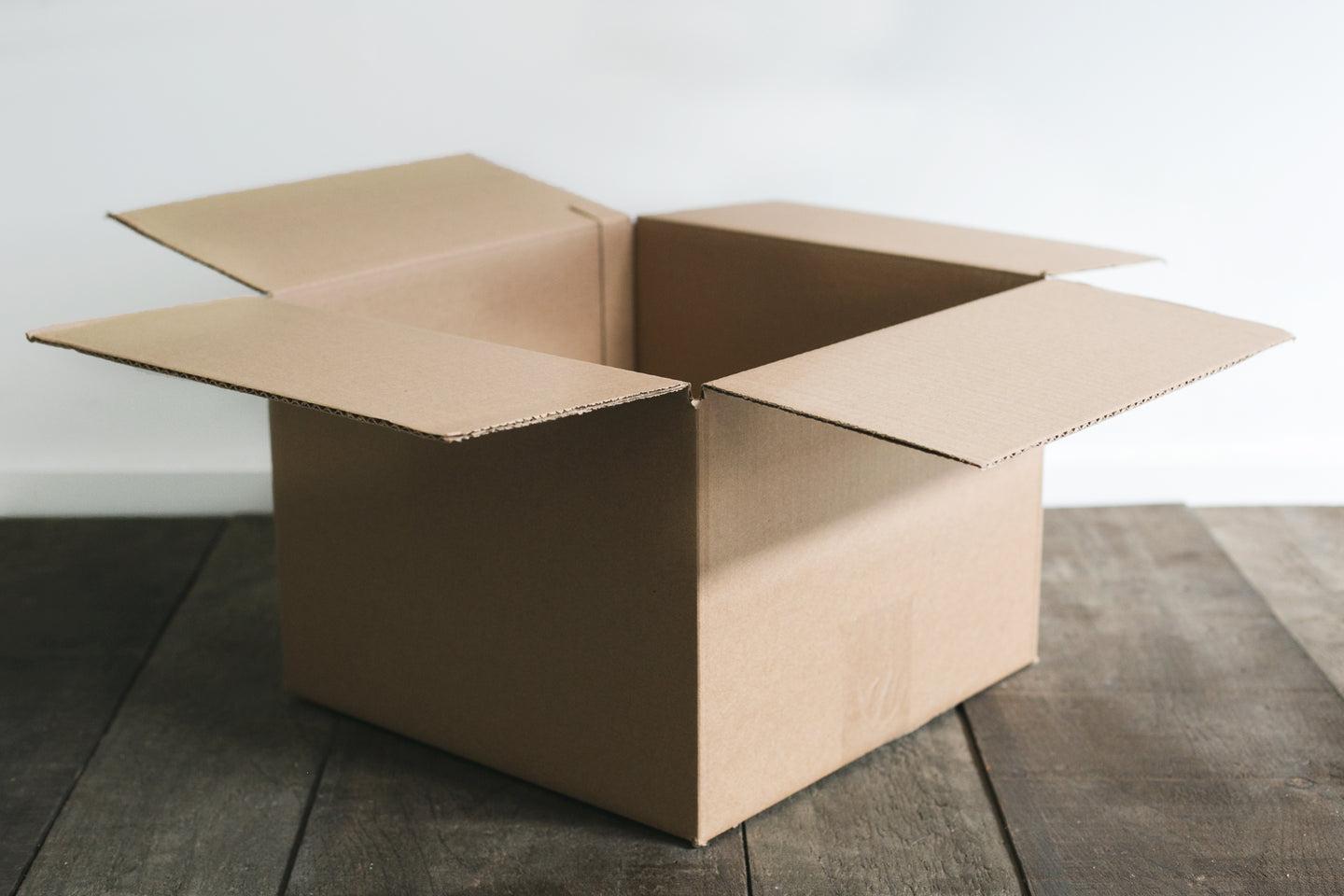
Close the product as you would pack it and measure its widest points, including any handles or caps. Add the insert or wrapping and measure again. For example, a 100 × 60 × 30 mm item might occupy 115 × 75 × 40 mm in its insert. In a box measuring 120 × 80 × 45 mm inside, that leaves 5 mm total along each axis, or 2.5 mm on either side of the centred insert.
Check the assembled sample with a ruler. Measure between the inside walls, first along the longer side of the opening and then the shorter side. Measure depth from the inside base to where the underside of the closed lid sits. Pack the item, close the lid and lift the item out again. The lid should clear the product and your fingers should have room to grip it. For shipping, test the cushioning with the actual product.
Methods
Model three rectangular packed items at four clearances. Add the stated gap to each of the six faces. Multiply the resulting inside length, width and height in millimetres, then divide by 1,000 to get cubic centimetres. Each percentage uses that item's zero-clearance volume as its baseline.
Results
| Packed item L × W × H (mm) | Gap per face (mm) | Box inside L × W × H (mm) | Inside volume (cm³) | Increase (%) |
|---|---|---|---|---|
| 120 × 80 × 45 | 0 | 120 × 80 × 45 | 432.0 | 0.0 |
| 120 × 80 × 45 | 2.5 | 125 × 85 × 50 | 531.2 | 23.0 |
| 120 × 80 × 45 | 5 | 130 × 90 × 55 | 643.5 | 49.0 |
| 120 × 80 × 45 | 10 | 140 × 100 × 65 | 910.0 | 110.6 |
| 200 × 150 × 80 | 0 | 200 × 150 × 80 | 2,400.0 | 0.0 |
| 200 × 150 × 80 | 2.5 | 205 × 155 × 85 | 2,700.9 | 12.5 |
| 200 × 150 × 80 | 5 | 210 × 160 × 90 | 3,024.0 | 26.0 |
| 200 × 150 × 80 | 10 | 220 × 170 × 100 | 3,740.0 | 55.8 |
| 300 × 220 × 120 | 0 | 300 × 220 × 120 | 7,920.0 | 0.0 |
| 300 × 220 × 120 | 2.5 | 305 × 225 × 125 | 8,578.1 | 8.3 |
| 300 × 220 × 120 | 5 | 310 × 230 × 130 | 9,269.0 | 17.0 |
| 300 × 220 × 120 | 10 | 320 × 240 × 140 | 10,752.0 | 35.8 |
Findings
- 120 × 80 × 45 mm: 432.0 to 643.5 cm³ (49.0% more).
- 200 × 150 × 80 mm: 2,400.0 to 3,024.0 cm³ (26.0% more).
- 300 × 220 × 120 mm: 7,920.0 to 9,269.0 cm³ (17.0% more).
Limitations
These are calculated dimensions. A product resting on the base has a different distribution of space. The table does not establish how much cushioning a particular product needs in transit.